Zero Trust AI requires more than security tools surrounding a model. If data, code, experiments, model artifacts and deployments cannot be traced and controlled, continuous verification remains a policy statement. MLOps provides the engineering processes through which that policy can operate.
Machine learning operations, or MLOps, brings data science, software engineering and operations together to build and maintain reliable production models. It covers the entire model lifecycle, including the changes that happen after deployment.
How MLOps relates to DevOps
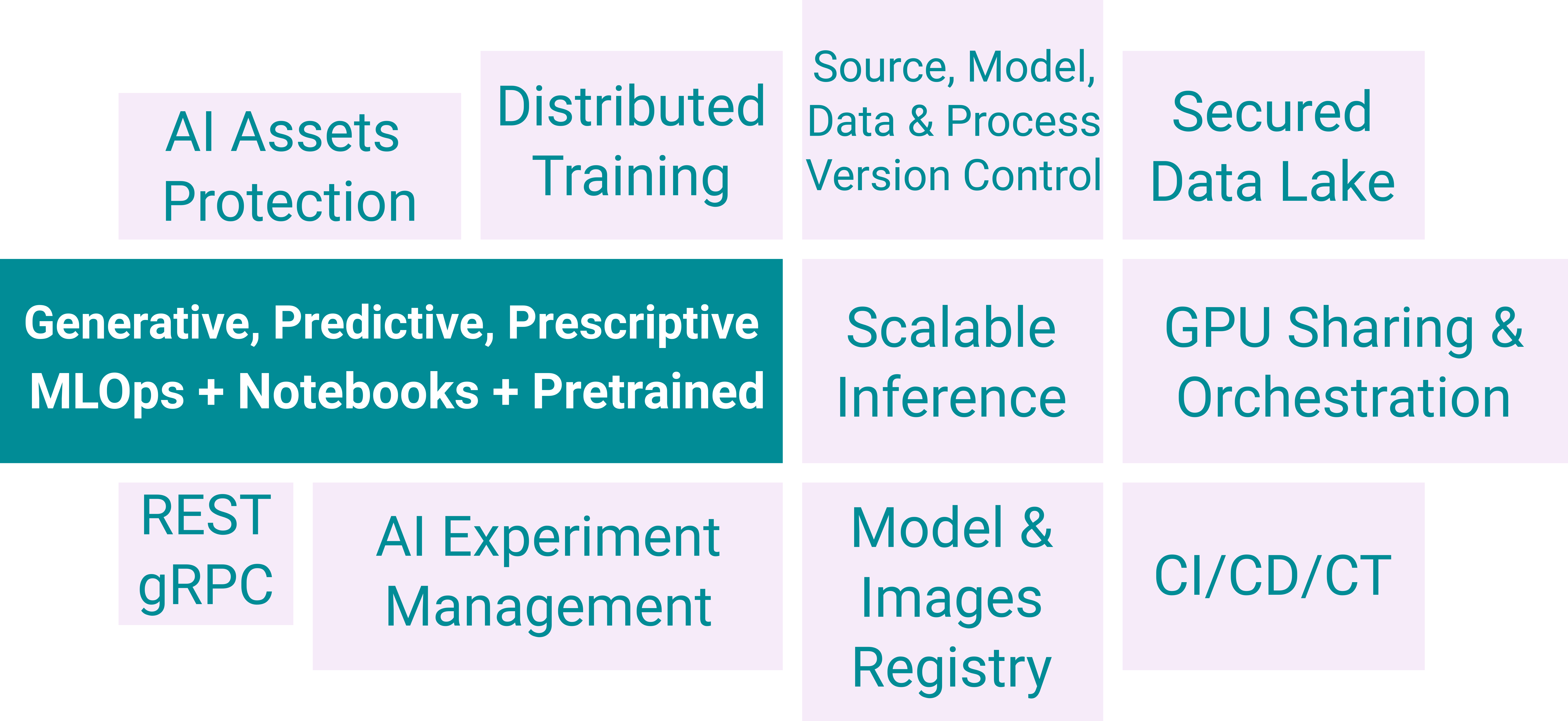
DevOps automates and monitors software development from coding and building through testing, release, deployment and operation. MLOps applies those practices to additional stages: collecting and exploring data, preparing it, training a model, evaluating it and monitoring its behavior in use.
Both aim to improve delivery speed, quality and operational reliability. Machine learning adds dependencies that are less prominent in conventional software. A model’s behavior depends on its training data; changing data may require retraining; and the resulting model artifacts need management alongside the application code.
Why the operational foundation matters
The first benefit is a shorter path from research to production. Automation reduces the manual work needed to move a model from an experiment into a service. Standardized steps also reduce avoidable mistakes, while monitoring makes problems easier to detect. Faster release is useful only when the organization can understand and manage what it is releasing.
The second benefit is scale. Without a shared process, every model becomes a separate project dependent on particular people and their local tools. A common lifecycle makes training, deployment and maintenance repeatable across models and teams.
The third benefit is governance. The organization needs to reconstruct which data, code and configuration produced a model, which evaluation supported its release and which version is serving a given request. This evidence supports security and privacy reviews as well as operational investigation. It must continue through retraining and replacement, rather than ending at the first deployment.
The main parts of the lifecycle
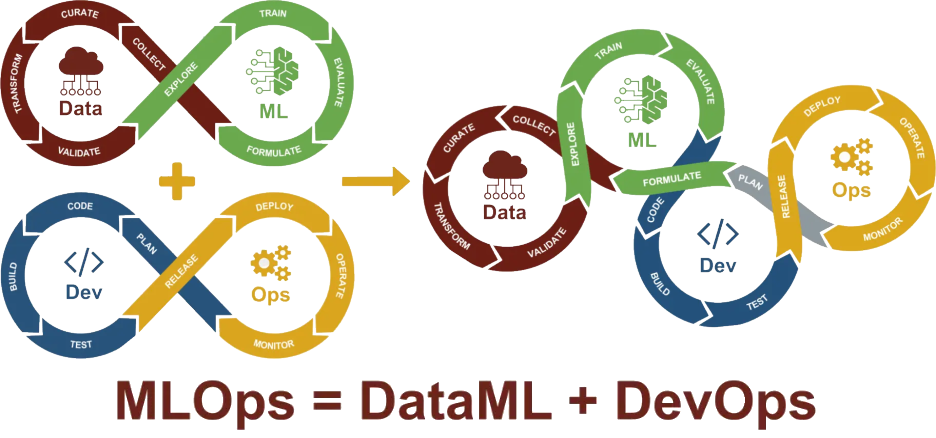
Data management includes collection, cleaning, feature engineering, versioning and a catalog. Code and configuration management tracks model code, training scripts, dependencies and settings. Training and validation organize experiments, hyperparameter selection, evaluation and approval into a process that can be repeated and increasingly automated.
The trained model must then be stored, versioned and associated with its supporting evidence. A registry can connect an artifact with its source code, dataset references, experiment results and release status. Deployment controls govern how that artifact reaches a server, an API service or an edge device.
After deployment, monitoring checks performance, changes in the input distribution and indications that the model no longer fits its intended use. Feedback brings new operational evidence into the next development or training cycle. A retraining trigger should lead through the required validation and release controls; it is not permission to replace a production model without them.
Security and governance run through all these activities. Access policies, retention rules, artifact integrity and approval requirements cannot be deferred to a final security review after the pipeline has already exposed sensitive data.
Where MLOps supports ZTAI
MLOps is not itself zero trust. It creates an observable, structured lifecycle in which security decisions can be enforced.
Versioned datasets, code and experiments make provenance and integrity assessable. A defined release path provides a place to admit or reject an artifact. Monitoring creates evidence for reassessing a deployment after its initial approval. Together, these capabilities move verification beyond login and into the operation of the service.
They also make limits visible. Recording a model’s origin does not prove that its training data is benign. Automating a pipeline does not remove the privileges of everyone who can change its code or inspect its outputs. Those decisions require the principles and controls of ZTAI to be designed into the workflow.
Most organizations build this capability gradually. The ZTAI maturity model describes a progression from isolated manual work to automated operations with development and sensitive production processing separated. Its final stage adds an architectural goal: routine work should not require people to handle raw sensitive data. Whether that goal is actually achieved depends on controlling indirect access as well as direct access.
Continue with the five-part ZTAI collection.